Lead Generation for Marketing Agencies: A Prospecting Playbook
 Natalie N., Founder · · 9 min readNatalie N., Founder · · 9 min read
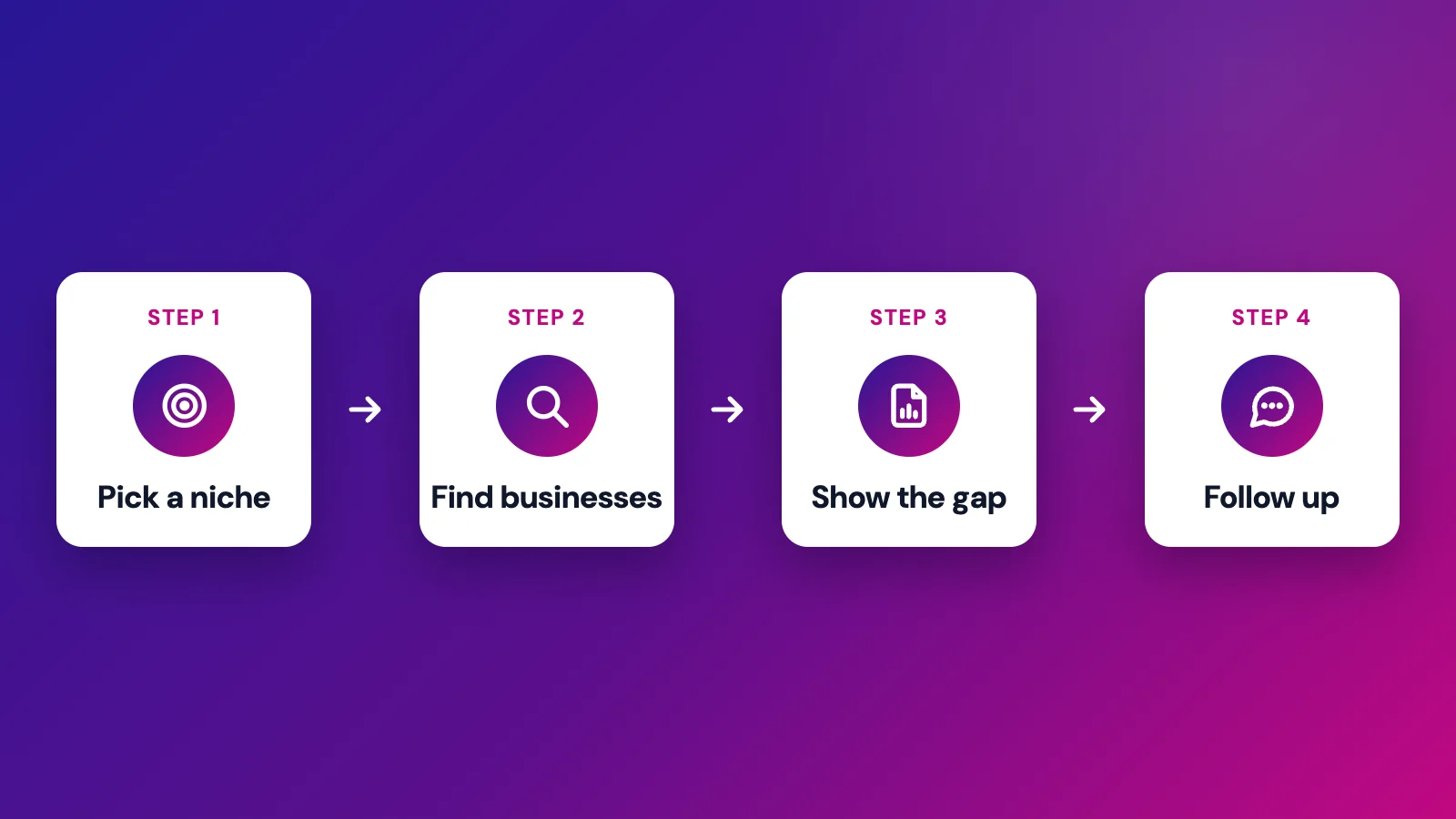
Lead generation for marketing agencies works best when you pick one kind of client, find the local businesses that are missing what you sell, show each one the specific gap, and follow up until they answer. Referrals and content pay off over time. Prospecting is the part you can start this week.
This is the playbook, step by step. The step most agencies skip is what they send first, and it's the one that decides whether anyone replies. That's further down, and it's worth the scroll.
"We help businesses grow" doesn't give you anyone to call. "We set up online booking for dental offices" does. Pick an industry and the one service you'd lead with. You can sell them more later. The first offer just has to be easy to say yes to.
By hand, you'd search a service and a city, open every listing, check each website for the thing you sell, and copy the good ones into a spreadsheet. It works, and it eats whole afternoons.
This is what I built Rockitgo Radar for. You type a service and a city, and Radar scans the businesses there for more than 100 signals: chat, booking, CRM, ad pixels, SEO basics, how the site holds up on a phone. Each business it finds gets an Opportunity Score built around the services you sell, so a dentist with no online booking scores high if booking is your thing, and low if you only sell SEO. Sort or filter by the score and your best fits are right there.
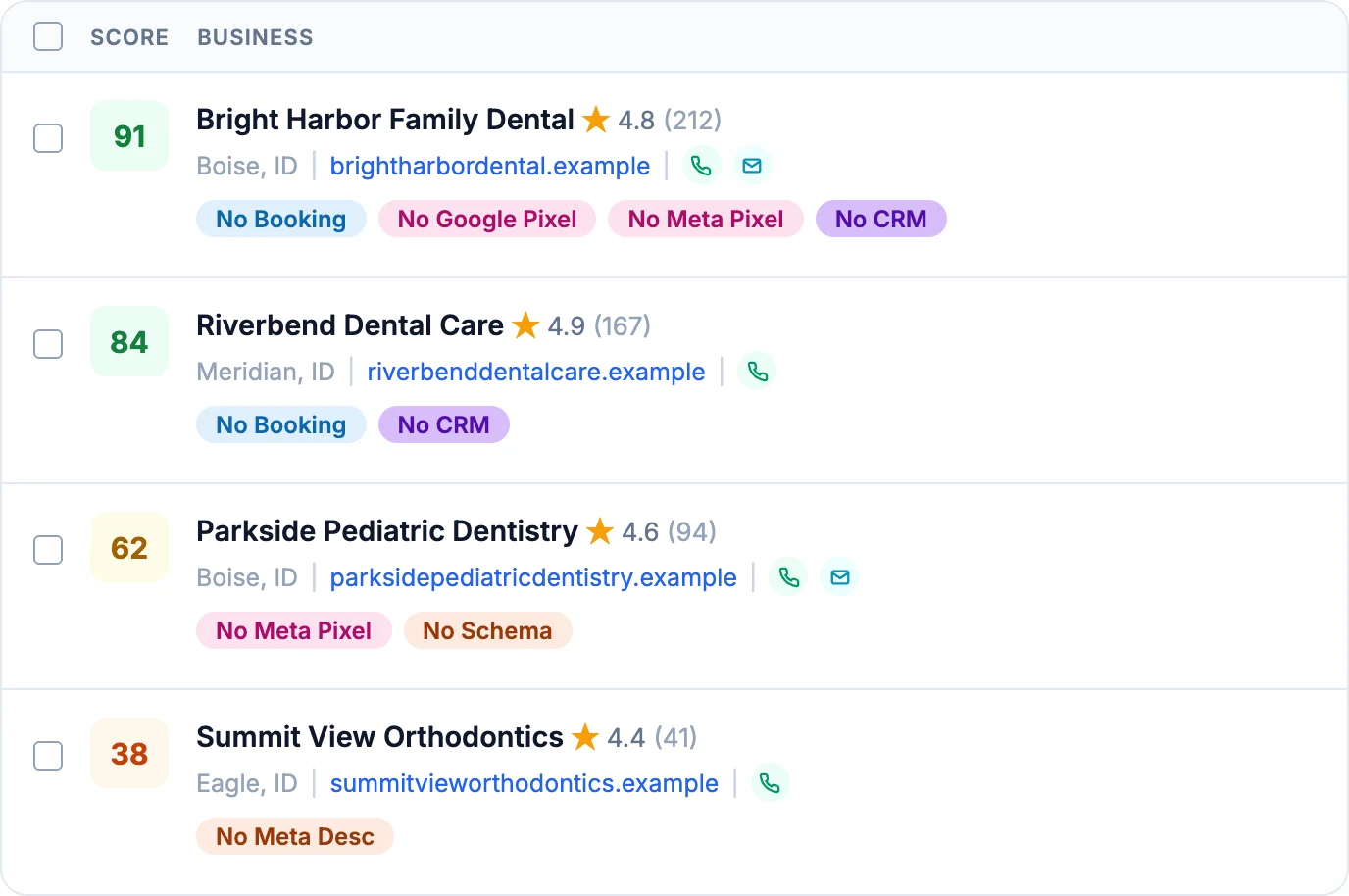
Pick a service and a city, and Radar scores each business it finds against your services.
Start your free trialA high score tells you the gap is there. A few more checks tell you whether they'll pay to fix it:
In Radar you can filter by score, signals, location, contactability, and whether you've already sent a report or added notes.
Here's the part most agencies get wrong. They open with what they do. The owner has heard "we do marketing" a hundred times, and it lands in the same pile as the last ninety-nine.
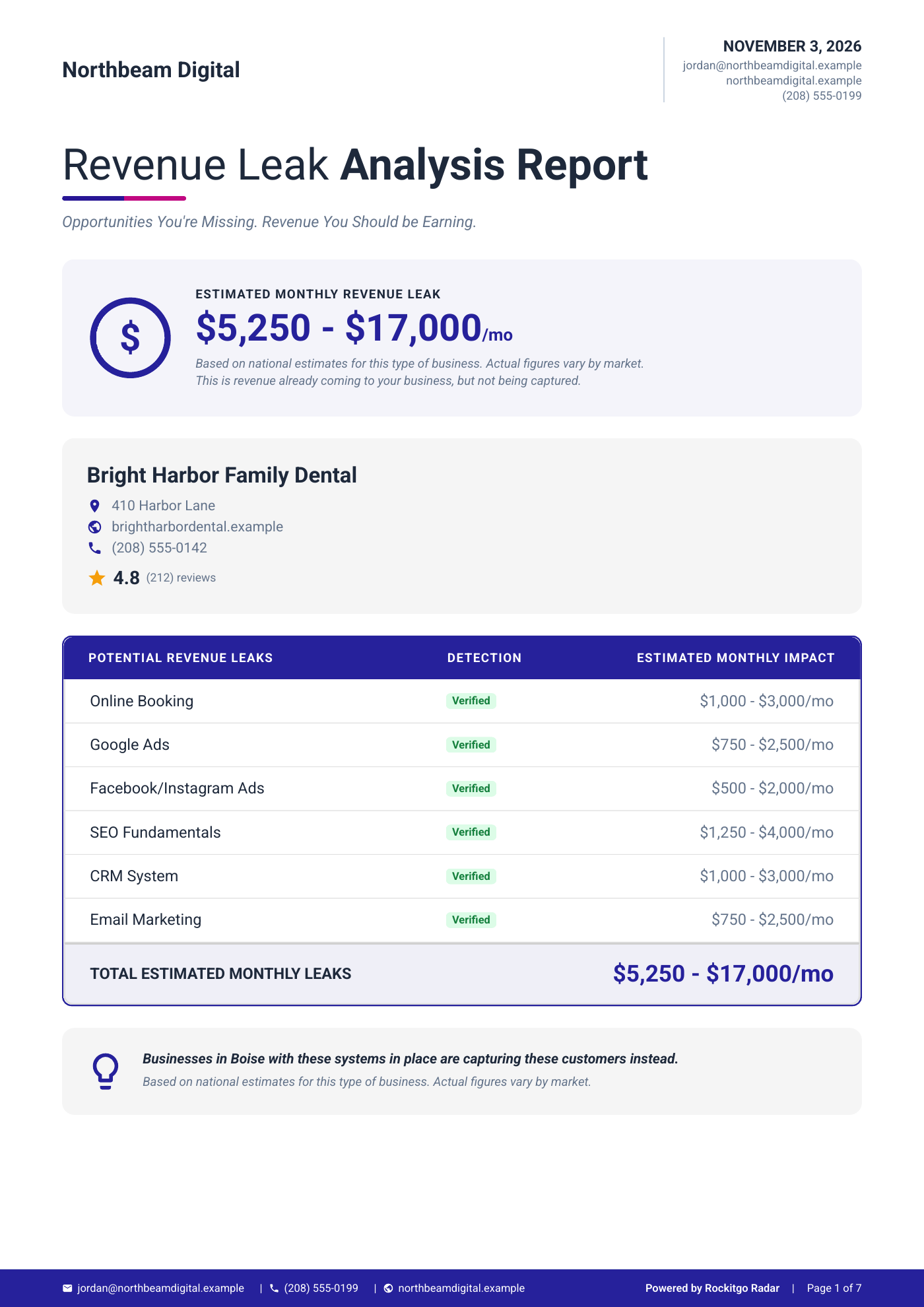
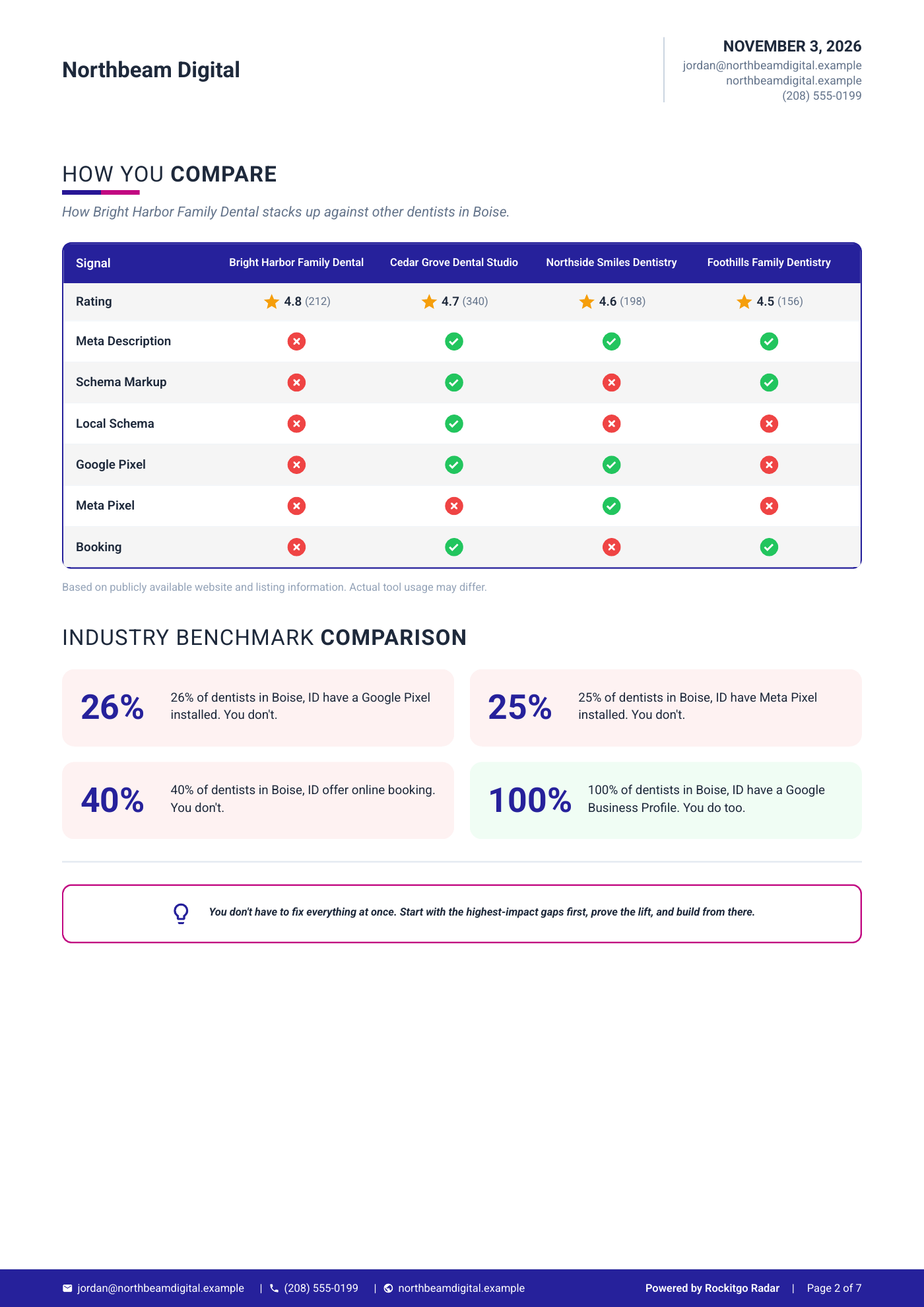
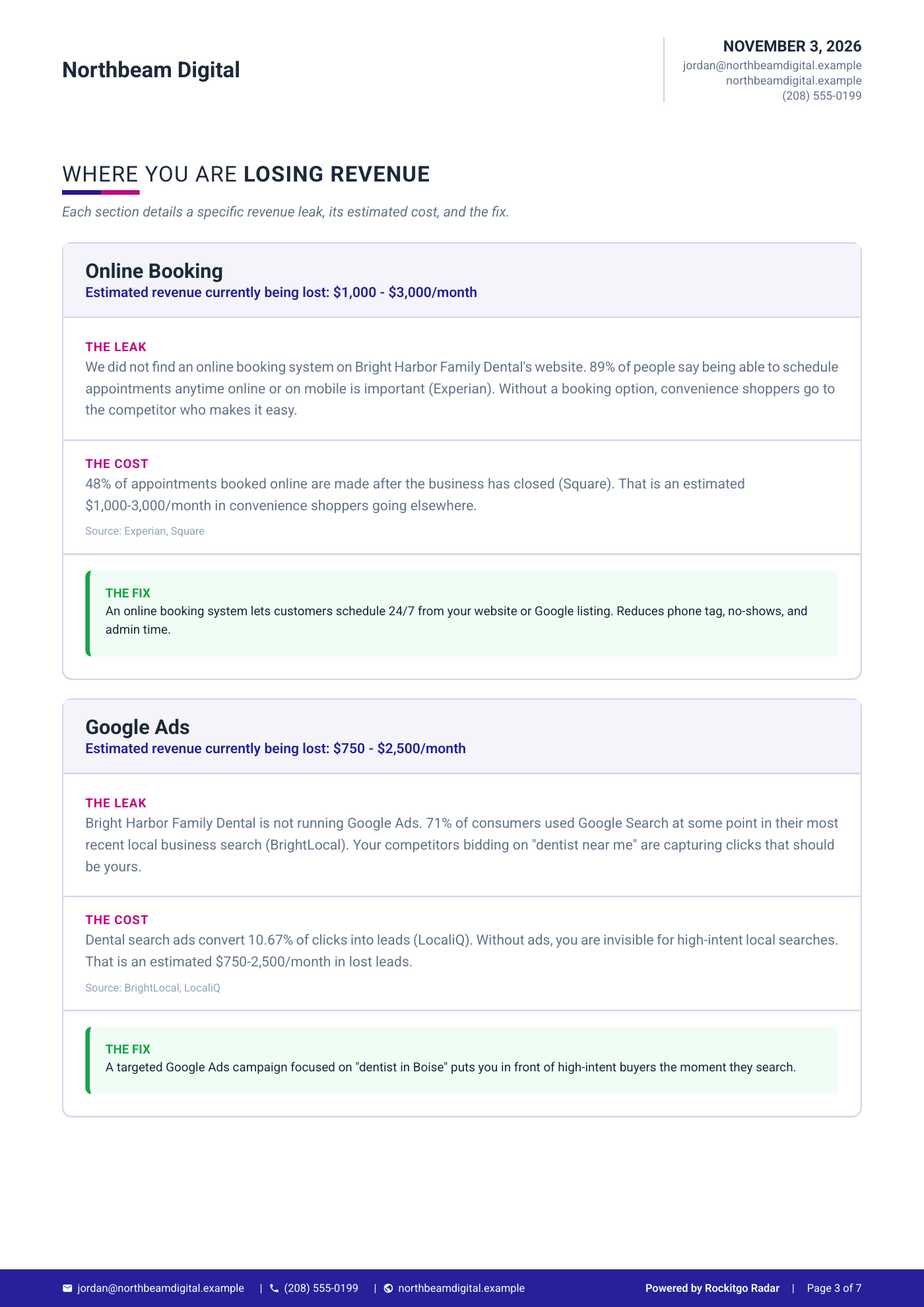
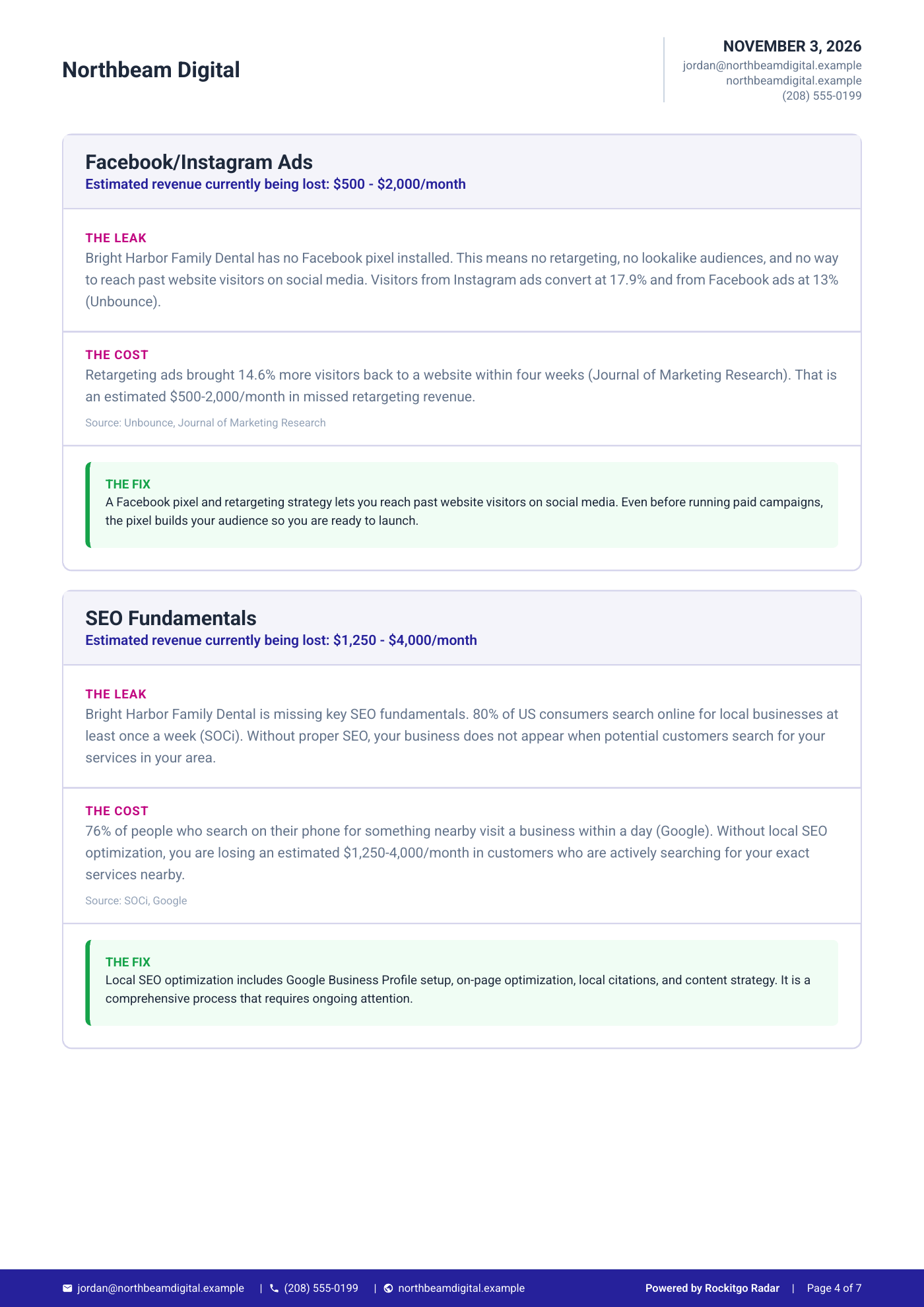
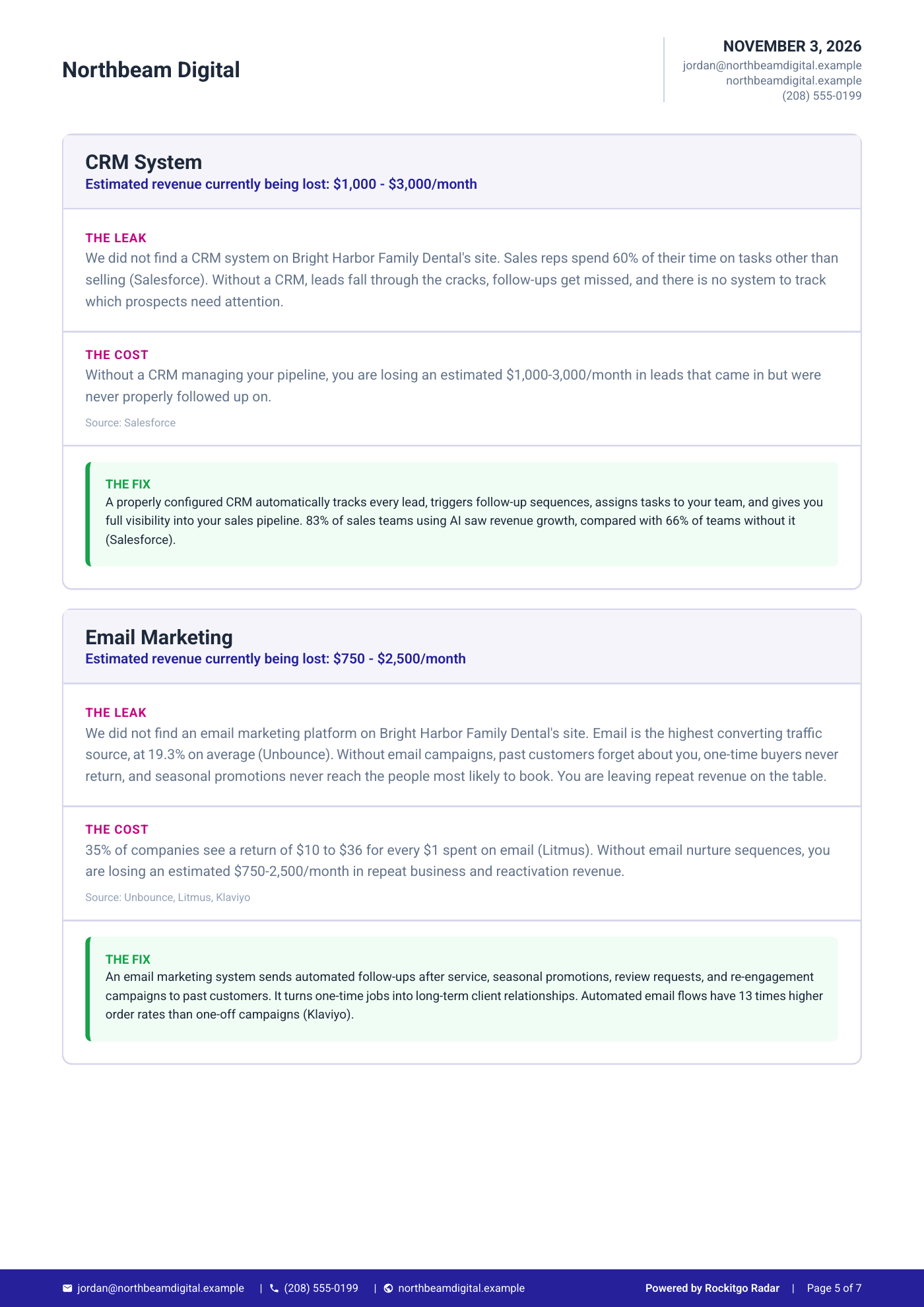
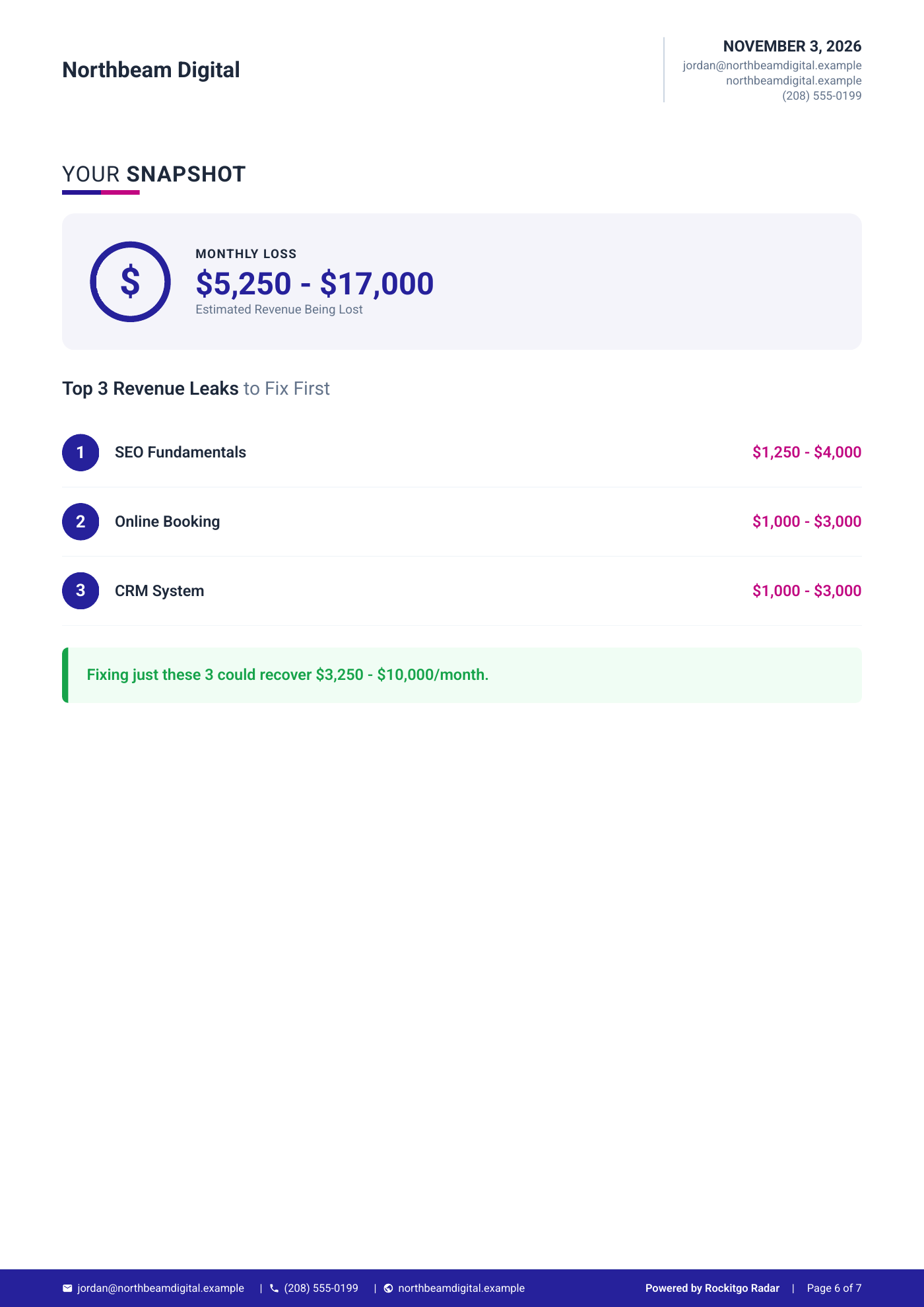
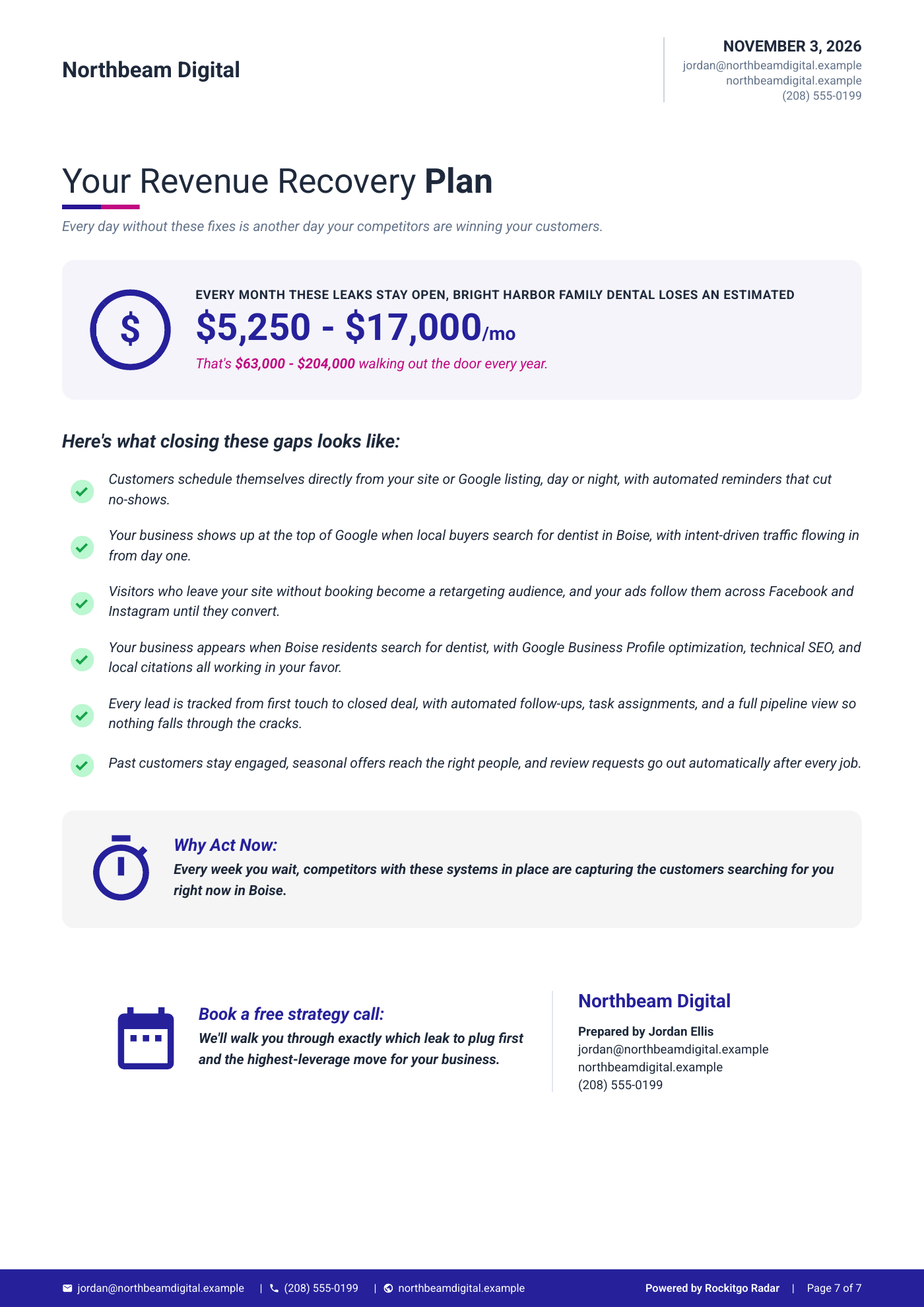
Open with what's happening to them instead. That's the job of the Revenue Leak Report. Pick a lead, choose what goes in it, and Radar builds a report for that business: their name, address and rating, then each gap broken into the leak, what it's likely costing them in dollars, and the fix. When nearby competitors from the same search are ahead, it compares them, and it ends with a recovery plan, with your agency's name and contact details on it.
It only shows the gaps that match what you sell, so an SEO agency and a chatbot builder get different reports for the same business. Download it as a PDF or send a share link (links expire after 30 days).
Keep it short and about them. One thing they can check in ten seconds, one small ask. Something like:
Hi [Name],
I was looking at dental offices in [City], and [Business] has great reviews, but there's no way to book online. Anyone searching after hours has to wait until morning to call, and some of them won't.
I put the details in a short report: [link]
Open to a 15-minute call this week to walk through it?
Talk soon,
[Your name]
Or let Radar write it. Once the report is ready, open Outreach, pick the service you're pitching, the channel (email, social DM or text) and the tone (friendly, professional, direct or consultative). Radar writes the message around that gap, using something the scan found on their site, with your report link already in it. Read it, change what you want, send.
One rule that applies to every cold email you send: the CAN-SPAM Act covers business-to-business email too. The FTC's guide says it "makes no exception for business-to-business email". Use your real name and address, keep the subject honest, and give people an easy way to opt out.
Most replies don't come from the first message. Plan on a few touches over a couple of weeks, and stop when someone says no.
Radar keeps that straight for you. Their phone number and email are on their listing: tap the number to call from your phone, or the email to open your own email app. Then mark them Contacted, Interested, Follow Up, Won, Lost or Not Interested, and add notes so you remember what was said. It's your pipeline, right inside Radar. If your team already works in GoHighLevel, push your leads there, or export them to CSV with their signals included.
If you want to try the whole loop on your own city, start a free trial of Rockitgo Radar and run your first scan today.
They all work, and you should have them. Referrals bring the warmest clients you'll ever get, but you can't schedule them. Content and SEO bring people to you, but they take months. Paid ads for your own agency can work once you know exactly who buys and what they pay.
Prospecting fills the gap while those grow. It's also how you learn which niche and which offer actually close, which makes everything else work better.
If no-website businesses are part of your market, here's how to find businesses without websites and which ones to pitch first. Or see how Radar works from scan to send.
Most agencies mix referrals, content, paid ads and outbound prospecting. Referrals and content are the warmest but the slowest. Prospecting is the one you control: pick a niche, find local businesses missing what you sell, show each one the specific gap, and follow up. That's how a new or growing agency fills its calendar quickly.
Start with one industry and one service you can explain in a sentence. Find businesses in that industry that are missing it, and lead with proof of the gap instead of a list of what you do. A short message with a specific finding and one small ask gets far more replies than a generic pitch.
Parts of it can. Finding businesses, checking their websites, scoring them and drafting a first message can all be done by a platform like Rockitgo Radar. The parts that still need you are choosing who to contact, reading what goes out, and the conversation once someone replies. That's where deals actually close.
It depends on what you're buying. Before you pay for a list, ask whether it's sold only to you and how the businesses were picked. Finding your own prospects means you choose who fits and you know exactly why you're contacting each one, which makes your first message far easier to write.
Pick a niche you understand and a service you can deliver well, then do outbound prospecting while referrals and content build up. Show each prospect something specific about their own business. A new agency has no case studies yet, so a clear, honest look at the prospect's gaps does that job for you.
Radar scores each business it finds in a city against the services you sell, then builds the report and the first message for any of them.
Start your 7-day free trial
Natalie N. is the founder of Rockitgo Radar. She's a UX/UI product designer with more than 20 years in tech and runs Rockitgo Digital, an agency focused on AI, automations and websites. Her team uses Radar every day to find new clients.